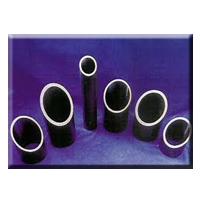
Cold-drawn tube is a precision steel tube produced by mechanically reducing a hot-rolled or welded green tube at room temperature. This process improves both dimensional tolerances and surface quality.
The green tube is first prepared by pickling and phosphating, then reduced to the required diameter and wall thickness on a drawing bench by mandrel or sink drawing. Multiple drawing passes are applied if required. The final step is heat treatment (NBK, GBK, or QT) followed by dimensional inspection.
Cold-drawn precision steel tubes are supplied in five delivery conditions depending on heat treatment state:
Cold-drawn tubes are extensively used in hydraulic cylinders, pneumatic circuit components, automotive shock absorbers, injector systems, conveyor shafts, and defence industry barrel systems.
What is the difference between cold-drawn and hot-rolled tube?
Hot-rolled tube has wider tolerances and is used for general structural applications. Cold-drawn tube offers much tighter tolerances and superior surface quality, making it preferred for precision mechanical applications.
What diameter ranges are available?
Under DIN 2391 / EN 10305-1, tubes are produced in outside diameter ranges from Ø 6 mm to Ø 120 mm with wall thicknesses between 0.5 mm and 15 mm. See our standards page for a detailed table.
How do I choose between NBK and BK condition?
If the tube will subsequently be bent, formed, or welded, NBK is preferred. If hardness and high tensile strength are the priority and the tube will not be formed, BK condition is appropriate.